
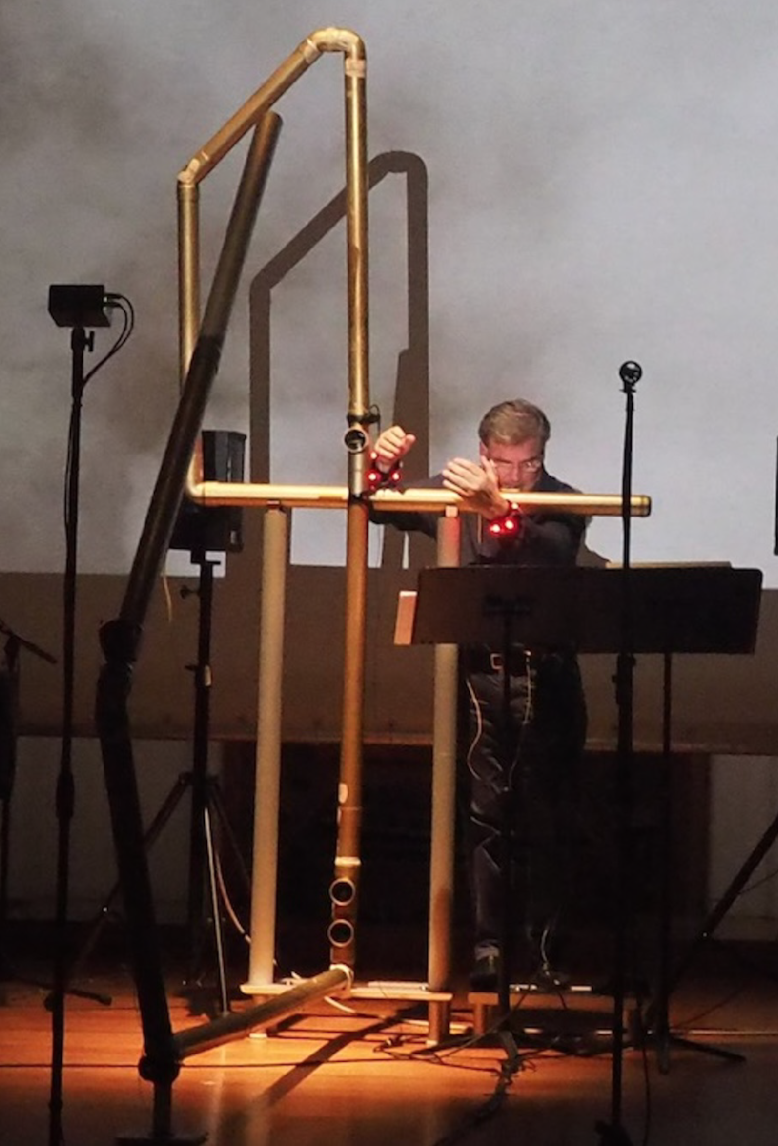
10. Hyperbass Flute
The hyperbass flute is the largest and lowest-pitched instrument in the flute family, which reaches a whopping length of over 8 meters. Unlike many of the instruments on this list, it was developed for a utilitarian purpose, that being to provide a low-range sound for large flute ensembles. As would be expected, these instruments are extremely rare, and there are only a couple known to be in existence.
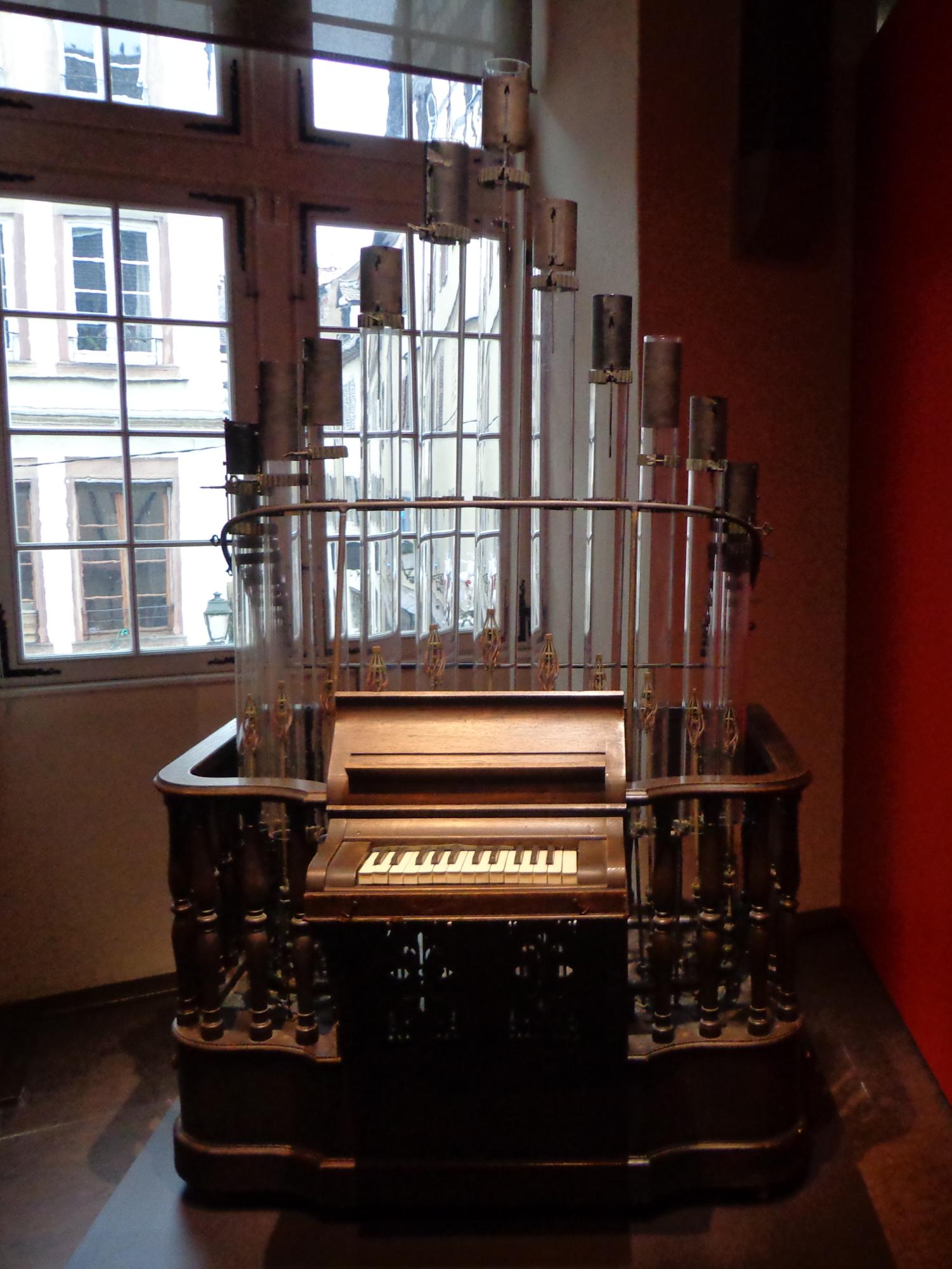
9. Pyrophone
The accurately-named “pyrophone” is a peculiar instrument, in which notes are made by explosions, or other forms of combustion, creating both light and sound. It was invented by French-German physicist and musician Georges Frédéric Eugène Kastner. This instrument, which is often powered by fuels such as gasoline and propane, never achieved any notable usage, though it was presented at the 1878 Paris exhibition, and had several proponents, including nobel peace prize winner and Red Cross founder Henry Dunant.

8. Theremin
The theremin is an electronic musical instrument controlled without physical contact by the performer. This instrument has been used to a reasonable extent and is associated with eerie scenes. Some even more peculiar theremins exist, however, including the “Beaver Theremin”.
7. Glass Armonica
The glass armonica is an elegant, yet treacherous, instrument invented by the famous Benjamin Franklin. It makes use of a series of glass bowls mounted on a rotating spindle, which are played by touching them with moistened fingers. While its tones were once popular, they were eventually blamed for causing madness, nervousness, and even miscarriage among listeners and players.

6. Zeusaphone
Sometimes called the singing tesla coil, this abomination is a variety of tesla coil that has been “modified to produce musical tones by modulating its spark output”. After its original release, it has seen minimal practical usage; however, it has been used by bands such as Trans-Siberian Orchestra and in a tribute to Nikola Tesla in the theme song of Voltron, a roller coaster in Germany based on the late scientist.

5. Singing Saw
The singing saw is exactly what it sounds like: a standard, albeit toothless, hand saw played as a musical instrument. By bowing the edge of the saw and simultaneously bending the flexible metal blade, the performer can manipulate the pitch and create an eerie, vibrating glissando. This instrument of lumberjacking origins produces one of the most distinctive and unearthly tremolos in musical history, often used for comedic or unsettling effect.
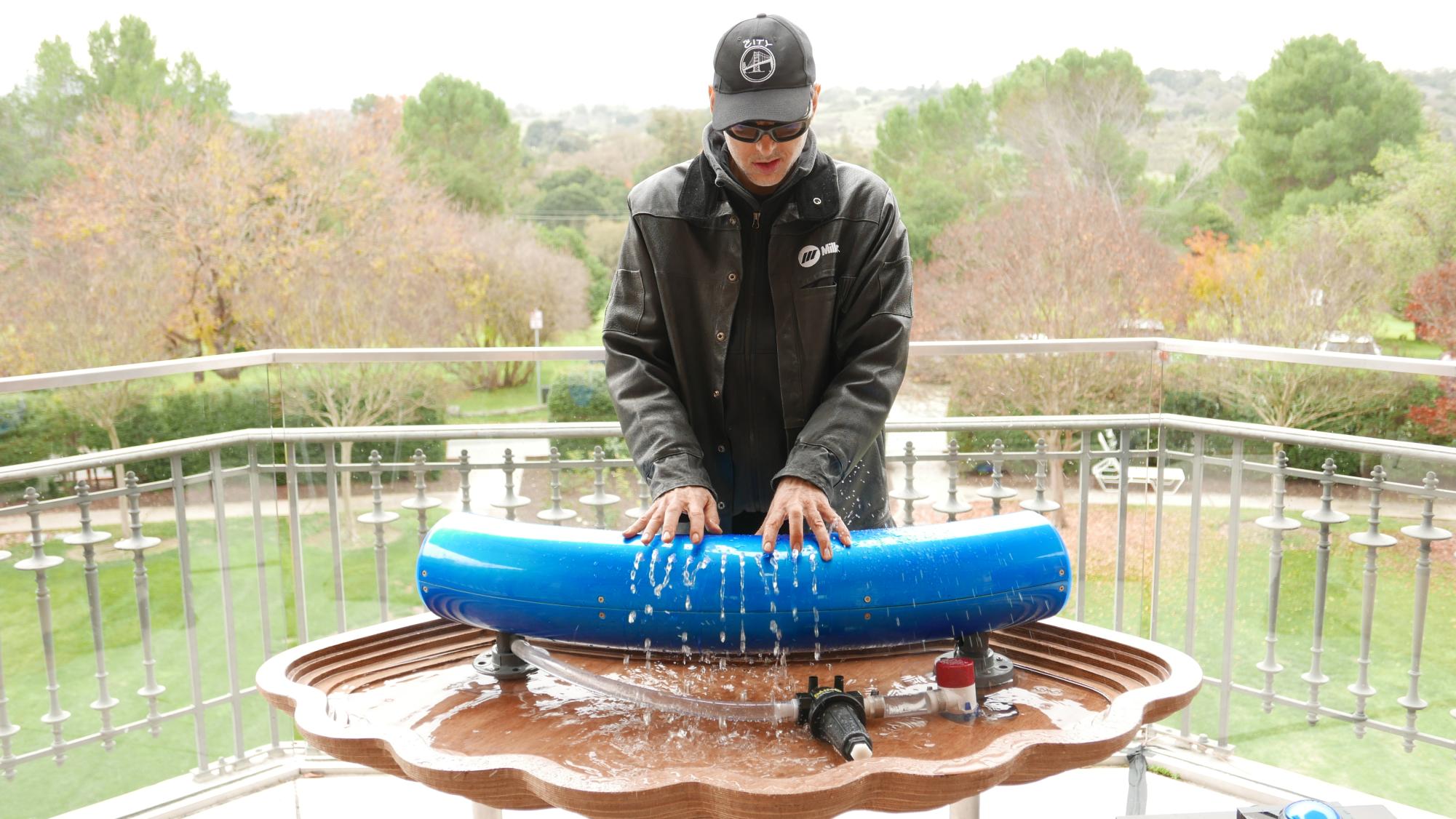
4. Hydraulophone
As one might deduce, the hydraulophone is a musical instrument played using water, functioning by stopping jets of water. The instrument is fundamentally a pipe organ that uses hydraulic fluid (water) rather than pneumatic fluid (air). Not only is it a musical device, but it often doubles as a sculptural fountain and a recreational water play structure, allowing the instrument to be played simultaneously by several bewildered passersby.

3. Pikasso Guitar
This twelve-string, four-necked, two-soundhole, asymmetrical abomination of a guitar was commissioned by jazz guitarist Pat Metheny and built by luthier Linda Manzer. With its daunting complexity and almost cubist appearance, it boasts 42 strings and is played using a variety of techniques that would drive a traditional guitarist mad. It is the epitome of over-engineering, but one cannot deny the peculiar, intricate soundscapes it can create.
(Image Source: Wikipedia)
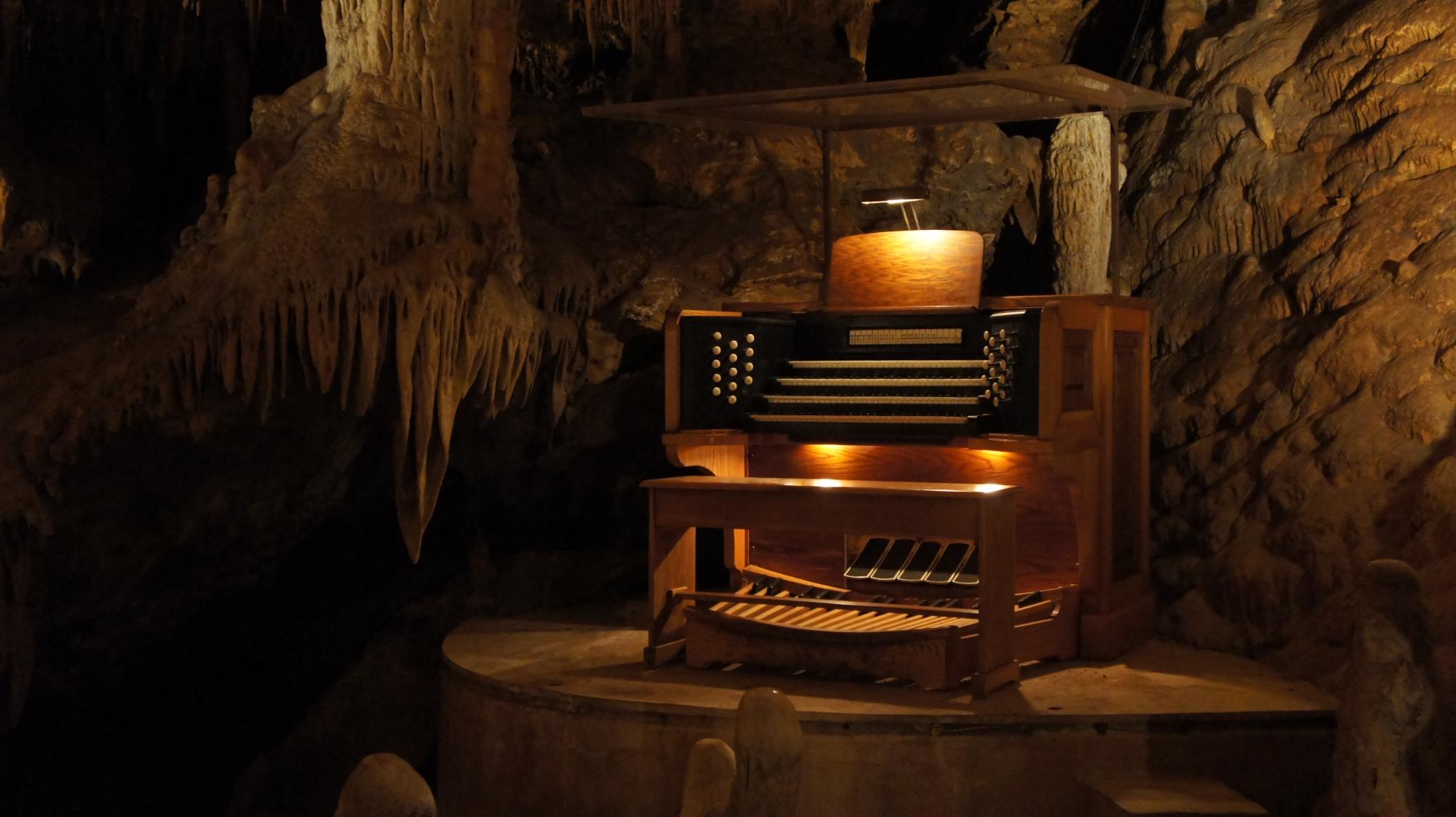
2. Gong-Shaped Keyboard (The Great Stalacpipe Organ)
Within the caverns of Luray, Virginia, sits the world’s largest musical instrument. This instrument is a lithophone covering 3.5 acres. Rather than typical organ pipes, this device uses solenoids that strike ancient, naturally-formed stalactites that have been meticulously shaved to produce precise musical pitches. The sound, resonating through the cold, damp cave air, is a strange, ethereal echo of geologic time.
(Image Source: Wikipedia)
1. Cat Piano (Katzenklavier)
The Cat Piano, a concept believed to have been designed by the peculiar German polymath Athanasius Kircher, is perhaps the darkest entry on this list. Thankfully, there is no credible evidence it was ever actually built. This keyboard contraption was to consist of a row of live cats, each with its tail affixed underneath a key. Upon pressing a key, a sharp object was intended to pierce the cat’s tail, eliciting a natural yowl. The cats were to be chosen and arranged by the natural pitch of their screams, creating a truly harrowing (and fortunately theoretical) chromatic scale.
(Image Source: Wikipedia)